Solar Energy

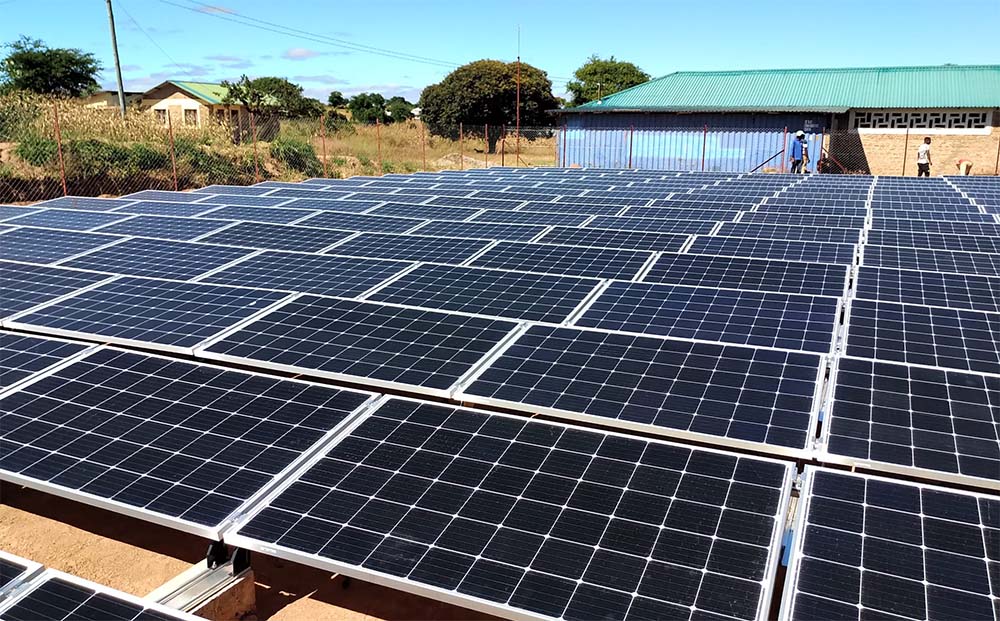
We bring the power of the sun to communities and businesses across Tanzania. We have successfully worked as EPC (Engineering, Procurement, and Construction) contractors on over 100 Solar Home Systems (SHS) and commercial & industrial (C&I) power plants, with a total installed capacity exceeding 200+ MW. These systems generate more than 1,022 MWh of clean energy annually, eliminating over 5,110 tons of CO₂ from the atmosphere and making a meaningful contribution to climate protection. Currently, an additional 200 KWh of solar power capacity is under development for 2024 and 2025, further expanding access to reliable renewable energy.Our notable projects include the 42kWp solar power plant in Kabuku, Tanga (2021), Kirurumo Health Centre in Arusha, Lugoba Children Centre in Pwani, Bethlehem Primary School in Arusha, and Benignis Girls Secondary School in Ifakara.

Each installation is designed to be affordable, reliable, and tailored to community and business needs. In addition to installation, we offer maintenance services to ensure systems remain efficient, durable, and long-lasting. We don’t just install solar systems — we create practical, long-term solutions that help Tanzania shine brighter, one project at a time.

Contrary to popular belief, Lorem Ipsum is not simply random text. It has roots in a piece of classical Latin literature from 45 BC, making it over 2000 years old. Richard McClintock, a Latin professor at Hampden-Sydney College in Virginia, looked up one of the more obscure Latin words, consectetur, from a Lorem Ipsum passage, and going through the cites of the word in classical literature, discovered the undoubtable source. Lorem Ipsum comes from sections 1.10.32 and 1.10.33 of “de Finibus Bonorum et Malorum” (The Extremes of Good and Evil) by Cicero, written in 45 BC. This book is a treatise on the theory of ethics, very popular during the Renaissance. The first line of Lorem Ipsum, “Lorem ipsum dolor sit amet..”, comes from a line in section 1.10.32.

The standard chunk of Lorem Ipsum used since the 1500s is reproduced below for those interested. Sections 1.10.32 and 1.10.33 from “de Finibus Bonorum et Malorum” by Cicero are also reproduced in their exact original form, accompanied by English versions from the 1914 translation by H. Rackham.