Hydropower

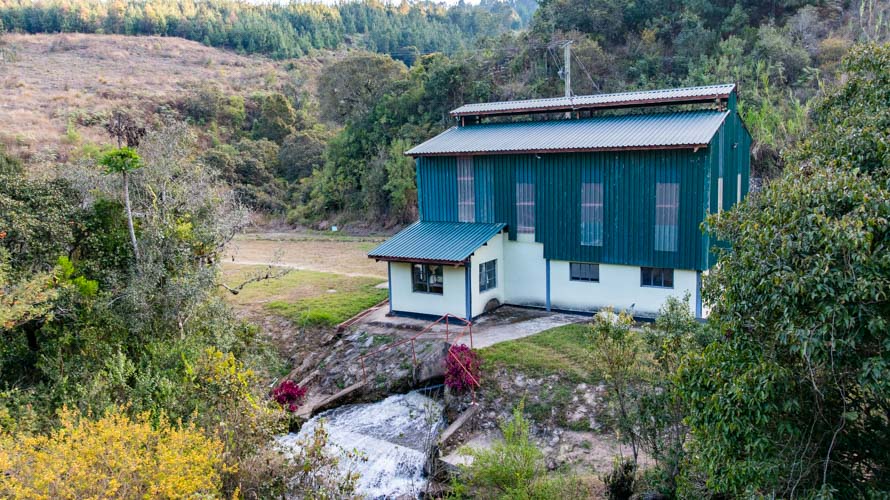
We are proud to deliver comprehensive hydropower solutions across East Africa, combining technical expertise with sustainable energy practices. We have successfully worked on 20 hydropower plants with a total installed capacity of 10.2 MW, generating more than 87.6 GWh of clean energy annually and eliminating over 43,800 tons of CO₂ from the atmosphere. Looking ahead, an additional 9.4 MW of generation capacity across four hydropower plants is under development in Tanzania for 2024 and 2025, further expanding access to renewable energy. Notably, at the Maguta Dam in Iringa, Tanzania, we are connecting the first turbine (1.2 MW) to the National Grid, marking a significant milestone in sustainable power generation.

Since 2017, in partnership with ZECO, we have been providing technical interventions and maintenance for several key facilities, including YOVI Hydropower Plant, Igola HPP, Luhololo HPP, Lugarawa HPP, Mawengi HPP, and Ikondo HPP, all located in the Njombe region. Our work ensures that these plants operate efficiently, reliably, and sustainably, empowering communities and supporting Tanzania’s transition to clean, renewable energy.

Contrary to popular belief, Lorem Ipsum is not simply random text. It has roots in a piece of classical Latin literature from 45 BC, making it over 2000 years old. Richard McClintock, a Latin professor at Hampden-Sydney College in Virginia, looked up one of the more obscure Latin words, consectetur, from a Lorem Ipsum passage, and going through the cites of the word in classical literature, discovered the undoubtable source. Lorem Ipsum comes from sections 1.10.32 and 1.10.33 of “de Finibus Bonorum et Malorum” (The Extremes of Good and Evil) by Cicero, written in 45 BC. This book is a treatise on the theory of ethics, very popular during the Renaissance. The first line of Lorem Ipsum, “Lorem ipsum dolor sit amet..”, comes from a line in section 1.10.32.

The standard chunk of Lorem Ipsum used since the 1500s is reproduced below for those interested. Sections 1.10.32 and 1.10.33 from “de Finibus Bonorum et Malorum” by Cicero are also reproduced in their exact original form, accompanied by English versions from the 1914 translation by H. Rackham.